
How to Improve Your Communication Skills: 8 Habits That Actually Work
Published June 24, 2026 · 8 min read
Good communicators rarely have a secret vocabulary or a booming voice. What they have are habits — small, repeatable things they do in almost every conversation. The encouraging part is that habits can be built. You don't need to be born charismatic to become someone people find easy, clear and warm to talk to. You need a handful of moves and enough reps to make them automatic. Here are eight that do the heavy lifting.
1. Listen to understand, not to reply
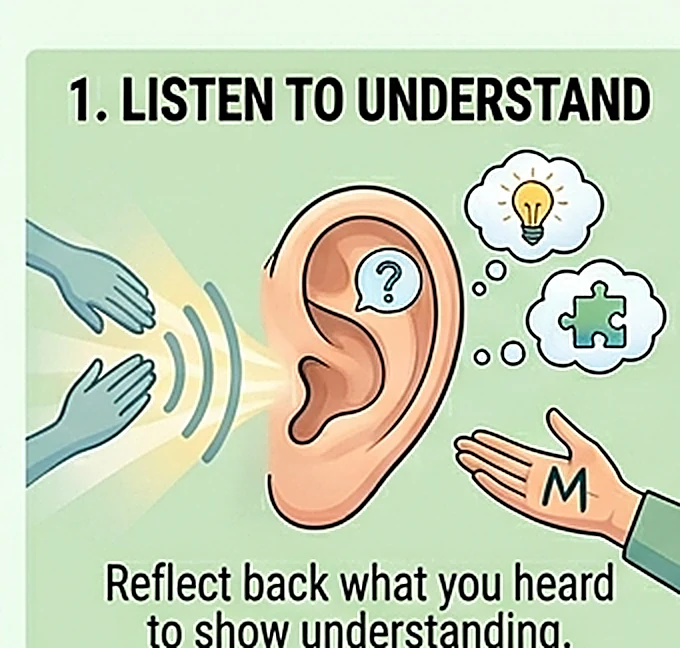
Most people listen just enough to find their turn to talk. The fix is simple to say and hard to do: while the other person is speaking, your only job is to understand them — not to load your response. Before you answer, reflect back what you heard ("so the frustrating part was the waiting?"). It costs five seconds and instantly makes people feel heard. This single habit improves every conversation you'll ever have, from a job interview to a first date.
2. Lead with your point
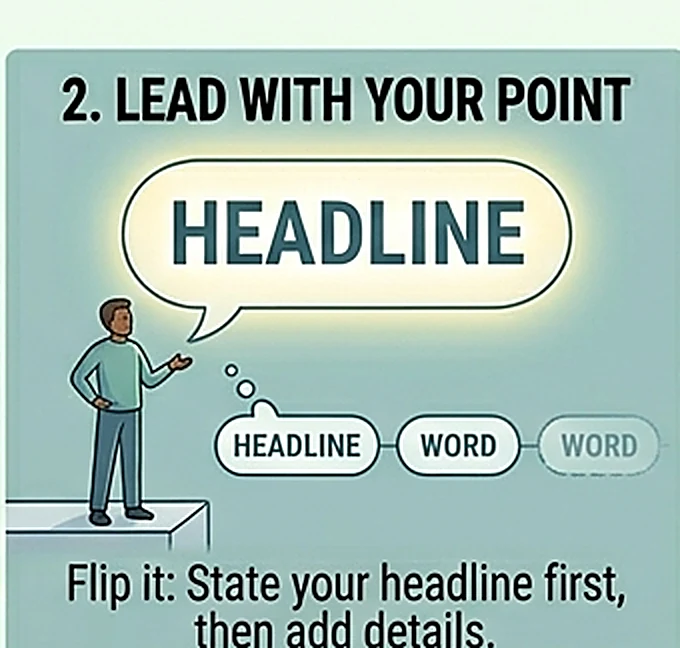
Clarity is kindness. When you bury your main point under three minutes of background, people quietly check out. Flip it: say the headline first, then add detail only if it's wanted. In a message, put the ask in the first line. In a story, get to the tension fast. People will think you're sharper — because being easy to follow is a form of sharpness.
3. Ask questions that open people up
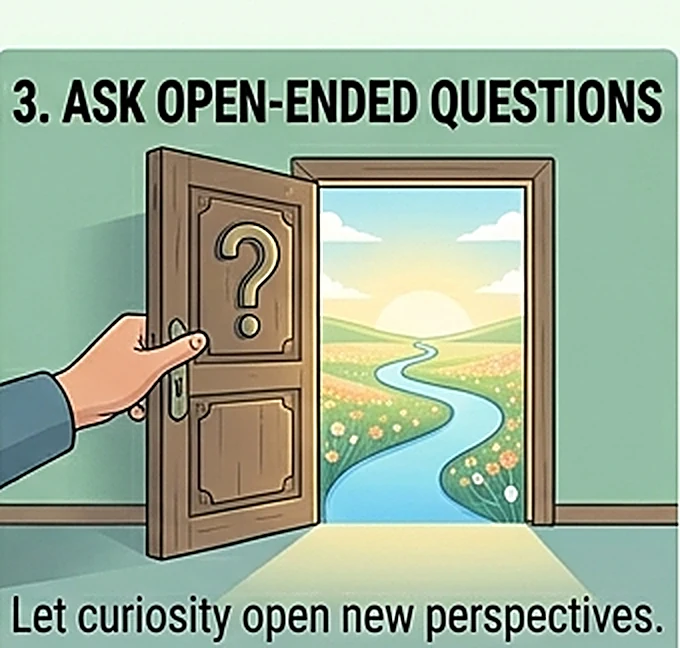
The fastest way to be interesting is to be interested. Swap yes/no questions for ones that invite a real answer: not "Good weekend?" but "What was the best part of your weekend?" This is the engine of small talk and the difference between awkward and easy when you're meeting new people. A warm, specific question does more for rapport than any clever line about yourself.
4. Read the room before you speak
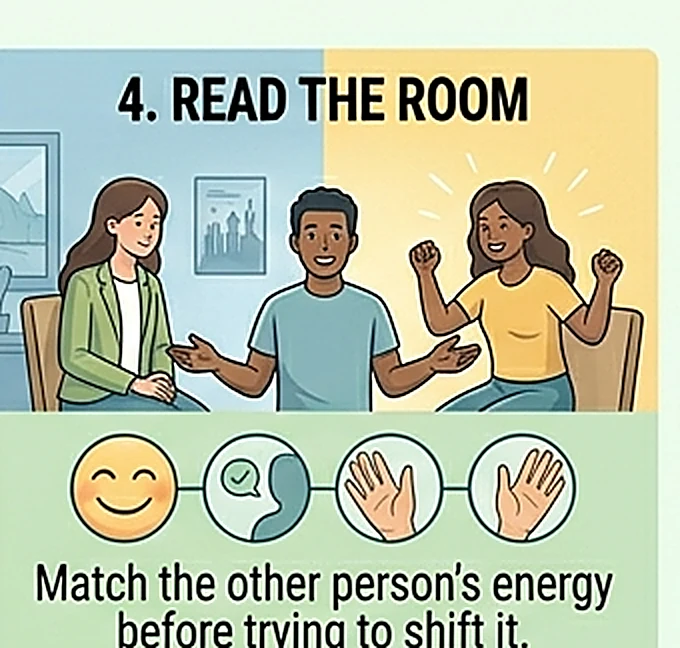
Words are maybe half of communication; the rest is timing, tone and body language. Notice the other person's energy and match it before you try to shift it. If they're tense, slow down and lower your voice. If they're playful, lighten up. Reading the room is what lets the same sentence land as charming in one moment and tone-deaf in another.
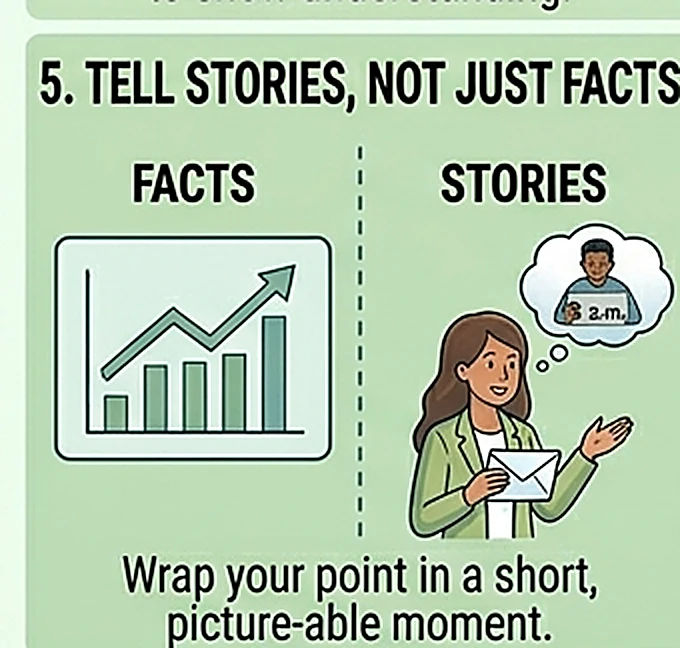
5. Tell stories, not just facts
Facts inform; stories move. When you want to be remembered — or to persuade — wrap your point in a short, concrete moment the listener can picture. "We doubled signups" is a fact. "A user emailed us at 2 a.m. to say this changed her week" is a story, and it sticks. You don't need drama, just a person, a moment and a turn.
6. Handle conflict without trying to win
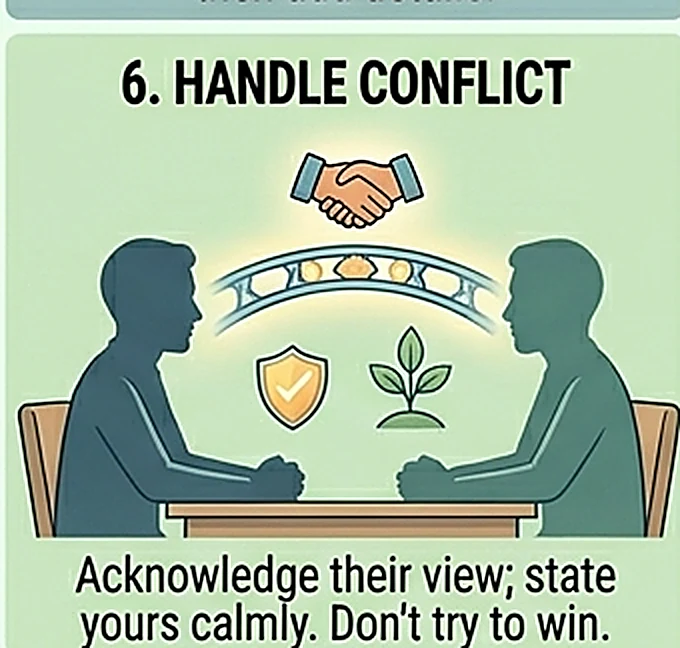
Disagreement isn't the enemy of communication — contempt is. When tension rises, resist the urge to score points. Acknowledge the part of their view that's fair, then state yours calmly and once. If you feel your temper climbing, name it out loud: "I want to get this right — can we slow down?" People remember how you made them feel in the hard moments far longer than who technically won.
7. Practise in the situations that actually matter
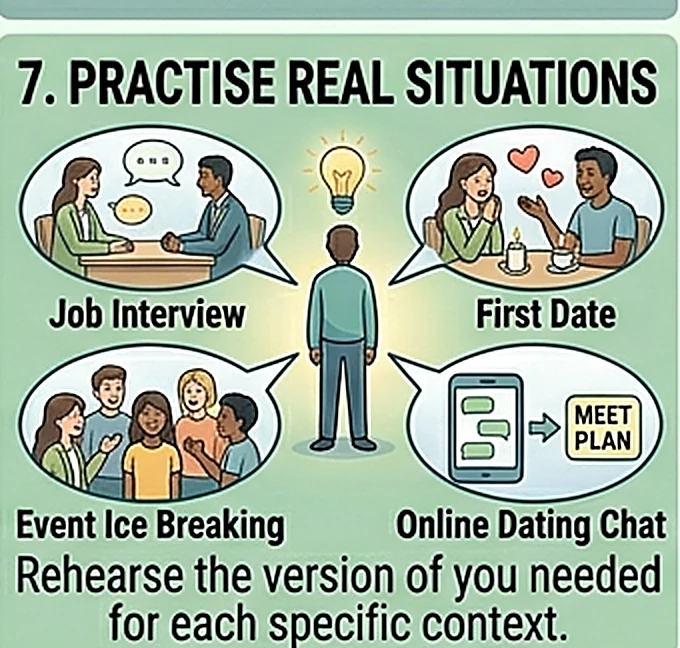
Communication skills are context-specific. The version of you in a relaxed chat with friends is not automatically the version of you in a high-stakes job interview, on a nervous first date, breaking the ice while meeting new people at an event, or carrying an online dating chat from a match to a real plan. Each of these has its own rhythm, and the only way to get smooth is to rehearse the real thing — not just read about it.
8. Get reps, not just theory
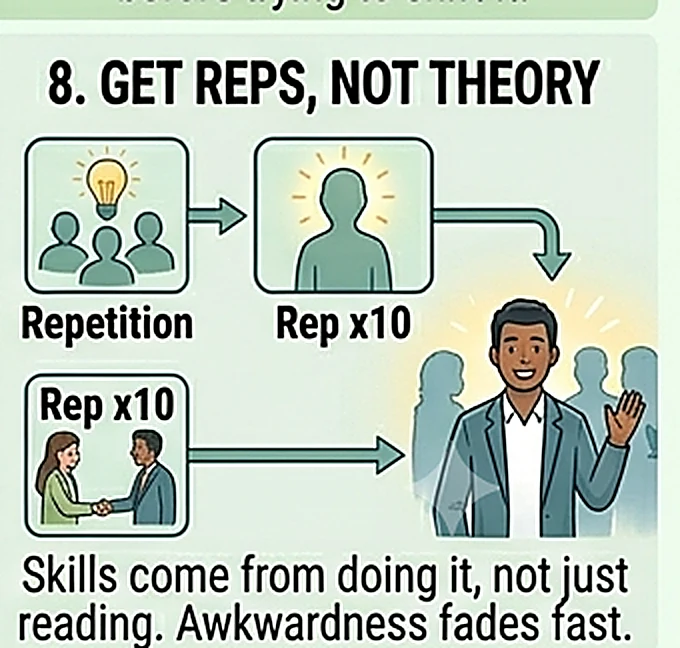
Here's the trap with articles like this one: reading them feels like progress, but nothing changes until you actually do it. Skills come from reps. Have the slightly-awkward conversation, ask the braver question, sit with the silence instead of filling it. Each rep moves the needle a little, and the awkwardness fades faster than you expect.
Not sure which habits are already strong and which are quietly costing you? Take our free communication skills test — it scores six dimensions of real conversation and tells you, bluntly, where to focus first.
Reading won't change how you talk. Reps will.
Step into real, interactive conversations — interviews, dates, small talk and online chats — choose your replies, and watch how each one lands.
Start practising now